 Weather data provided by OpenWeather
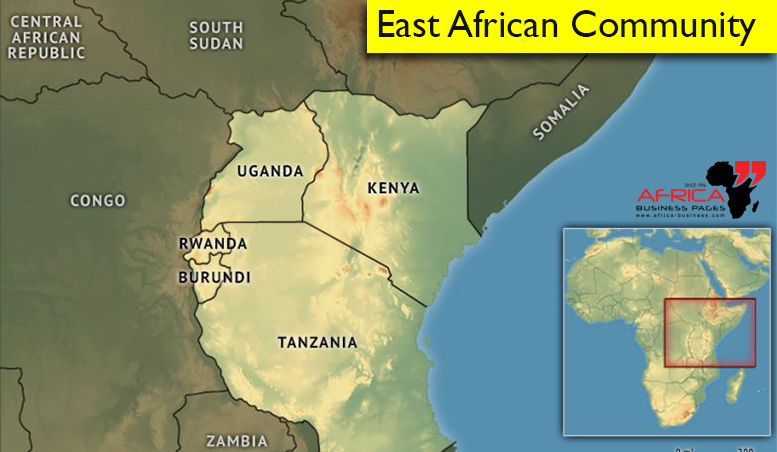
East Africa is expected to maintain a stronger long-term economic growth trajectory than West Africa, supported by more diversified economies, deeper regional integration and relatively developed industrial bases.
Chief Economist of Standard Bank Group, Ghulam Balim, says the region’s economic structure and trade relationships are giving it an advantage over other parts of the continent.
He estimates that East Africa could record average growth of approximately six per cent over the longer term, compared with five per cent for West Africa.
Central Africa is projected to average four per cent, while Southern Africa could record between two and three per cent.
Balim describes the regional growth outlook as a 6-5-4-2 framework.
“I have a 6, 4, 3, 2 paradigm around this. East Africa, 6 percent on average. West Africa, 5. Central Africa, 4. Southern Africa, between 2 and 3,” he said in an interview with 3Business.
He attributes East Africa’s stronger outlook partly to the diversification of its economies.
According to him, several economies in the region have developed broader industrial bases and are less dependent on individual commodities or sectors.
“East Africa benefits from diversification. The economies are less monoline and they have more diversified industrial bases. Secondly, East Africa is quite integrated as a region,” he said.
Regional trade provides a competitive advantage
Balim also identifies regional trade integration as a major factor behind East Africa’s economic performance.
He says stronger trade relationships among neighbouring countries allow businesses to access larger markets and support cross-border economic activity.
“Indicatively, East Africa has intra-Africa trade at around 45 to 50 percent, whereas the pan-African region is slightly lower than 20 percent,” he said.
The broader argument is that regional integration can help African economies overcome the limitations of relatively small domestic markets.
By expanding trade across borders, countries can increase the potential market for locally manufactured goods, attract investment and develop regional supply chains.
However, official regional trade figures require some qualification.
The United Nations Economic Commission for Africa’s 2025 Assessing Regional Integration in Africa report puts intra-African trade at approximately 16 per cent of the continent’s total trade.
For the East African Community, the report found that 28 per cent of merchandise exports went to African markets between 2019 and 2023, significantly above the continental average.
The EAC has also acknowledged that intra-regional trade remains below its potential.
In February 2026, the regional bloc said intra-EAC trade had remained at approximately 15 per cent of total trade for more than a decade, despite its ambition to raise that share to between 30 and 50 per cent or higher.
What West Africa can learn
For West Africa, Balim believes deeper integration, stronger institutions and economic diversification will be important to improving the region’s long-term growth prospects.
He points to greater predictability, stronger rule of law and an established industrial base as additional advantages supporting East Africa.
He also makes an interesting observation about the relationship between natural resources and economic development.
According to him, countries with limited natural resource endowments have sometimes been compelled to develop alternative sources of economic growth rather than depend heavily on commodity exports.
He argues that resource wealth does not automatically translate into industrial development or improved living standards.
The observation is particularly relevant to West African economies, including Ghana and Nigeria, which have significant natural resource endowments but continue to pursue broader economic diversification.
AfCFTA presents an opportunity
The African Continental Free Trade Area provides a framework for addressing some of these challenges.
By creating a single continental market, the agreement seeks to increase intra-African trade, encourage investment and support the development of regional value chains.
However, implementation challenges, including infrastructure deficits, border delays, regulatory differences and non-tariff barriers, continue to constrain the expansion of cross-border trade.
For Ghana, which hosts the AfCFTA Secretariat in Accra, the ability to translate the agreement into increased trade and industrial activity remains particularly important.
Balim believes the continent must prioritise its strategic economic interests and strengthen commercial partnerships across different regions.
For West Africa, the message is clear: sustained growth will require more than favourable commodity prices. Diversification, industrial development and deeper regional trade integration will be equally important.