 Weather data provided by OpenWeather
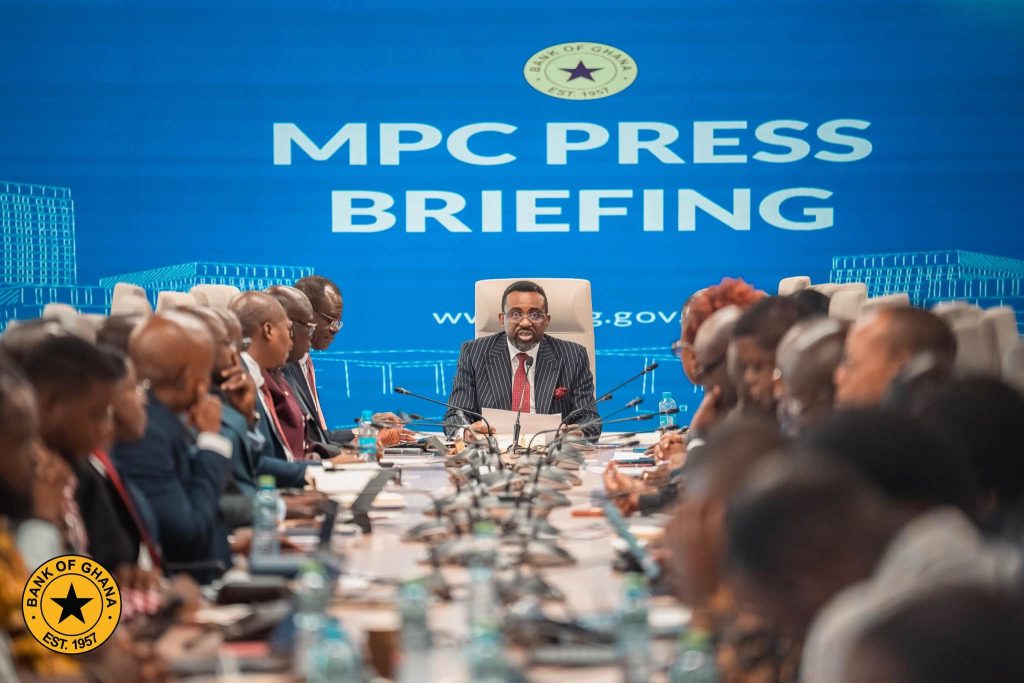
The Bank of Ghana’s Monetary Policy Committee (MPC), at its 133rd meeting held from 16 to 18 November 2026, has announced an alignment of the Monetary Policy Rate (MPR) from 14 per cent to 11 per cent.
The Committee also announced additional reforms, including narrowing the monetary policy corridor from ±400 to ±100 basis points and replacing the 14-day Open Market Operations (OMO) instrument with a 7-day instrument.
In the Committee’s assessment: “Prevailing market rates have evolved at levels below the current monetary policy rate, indicating that the effective policy stance is lower than the announced rate.”
The alignment is therefore intended to better reflect prevailing market conditions and strengthen the effectiveness of monetary policy transmission.
On the domestic front, economic growth remained strong in the year through September. The Bank’s updated high frequency real sector indicators point to a pickup in activity, with the Composite Index of Economic Activity (CIEA) growing 17.7 percent year-on-year in September 2026, up from 9.6 percent in September 2025.
Growth in the CIEA was largely supported by private sector credit, exports, tourist arrivals, and construction activity. The October 2026 confidence surveys showed mixed sentiments.
Consumer confidence weakened, reflecting higher ex-pump petroleum prices and transport fares, while business confidence remained broadly unchanged. Businesses’ concerns about rising input costs were offset by optimism about positive company and industry prospects, given the stable macroeconomic conditions.
Headline inflation rose to 5.5 percent in October 2026 from 5.2 percent in September but remained below the lower bound of the medium-term target. The increase was driven mainly by non-food inflation, which rose to 7.9 percent from 6.2 percent, largely reflecting higher utility tariffs and elevated crude oil prices. In contrast, food inflation fell to 2.8 percent from 4.0 percent, on the back of improved food supply conditions. Underlying inflationary pressures have also increased slightly.
The Bank’s core inflation measure, which excludes energy and utility prices, rose to 5.2 percent in October from 5.0 percent in September. Inflation expectations among consumers, businesses, and the banking sector picked up, but remained anchored within the medium-term target band.