 Weather data provided by OpenWeather
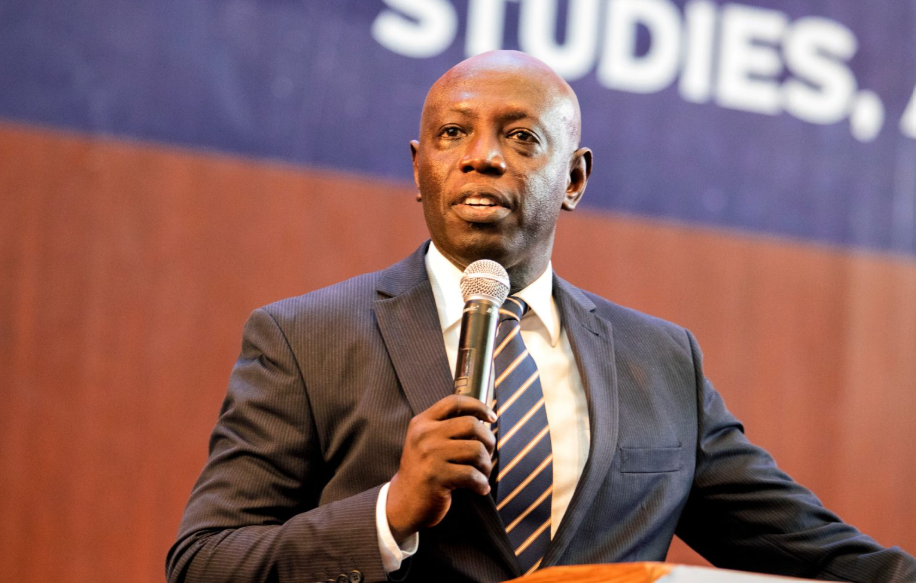
The Institute of Economic Research and Public Policy (IERPP) has asked the Ministry of Finance and the Bank of Ghana (BoG) to clarify the Women’s Development Bank (WDB).
They want to know exactly what the government is establishing.
They asked whether the Women’s Development Bank is a universal bank, a specialised bank, a development finance institution or a microfinance institution.
Why does the November 18, 2026 Daily Graphic recruitment advertisement describe it as a new microfinance institution when Government continues to present it as a bank? They also asked.
On July 23, 2026, Finance Minister Dr Cassiel Ato Forson announced that Government had deposited GH¢400 million with the Bank of Ghana as the initial capital for the proposed Women’s Development Bank. He further indicated that the institution had applied for the requisite banking licence.
Government has also indicated its commitment to providing an additional GH¢100 million to support the institution’s operational activities.
However, IERPP noted that a significant contradiction has emerged.
They observed that the recruitment advertisement published in the Daily Graphic on November 18, 2026, under the heading “Recruitment of Key Management Personnel for a New Microfinance Institution,” describes the institution as a reputable microfinance institution with its head office in Accra and planned branches across the country.
IERPP, in a statement signed by its Executive Director, Professor Isaac Boadi, said that “This is not a minor administrative discrepancy. It raises fundamental questions about the actual identity, regulatory classification and intended operational mandate of the institution. Why is the Government consistently presenting this initiative as a Women’s Development Bank while the recruitment advertisement describes it as a microfinance institution? What specific licence has been applied for, and what is the current status of the application before the Bank of Ghana?
“Does the contradiction between Government’s announcement of GH¢400 million in initial capital for the proposed Women’s Development Bank and the subsequent recruitment advertisement describing the institution as a microfinance institution raise questions about whether the GH¢400 million was genuinely set aside and deposited with the Bank of Ghana as claimed? Can Government provide documentary evidence of the deposit and clarify precisely how the funds have been allocated?
“What will be the actual operational mandate of the institution, and what financial services will it be authorised to provide? Why is Government establishing a new institution instead of strengthening MASLOC and other existing financial institutions with the resources committed to this initiative?”
Below is their full release…
PRESS STATEMENT
FOR IMMEDIATE RELEASE
WOMEN’S DEVELOPMENT BANK: GOVERNMENT MUST CLARIFY WHETHER IT IS ESTABLISHING A DEVELOPMENT BANK OR A MICROFINANCE INSTITUTION
The Institute of Economic Research and Public Policy (IERPP) is demanding an immediate explanation from the Government of Ghana over growing inconsistencies surrounding the establishment of the much-publicised Women’s Development Bank.
The central question is straightforward: Is the Government establishing a fully-fledged bank or a microfinance institution?
Ghanaians deserve a clear answer, particularly given the substantial public resources committed to this initiative and the expectations created around it.
On July 23, 2026, Finance Minister Dr Cassiel Ato Forson announced that Government had deposited GH¢400 million with the Bank of Ghana as the initial capital for the proposed Women’s Development Bank. He further indicated that the institution had applied for the requisite banking licence.
Government has also indicated its commitment to providing an additional GH¢100 million to support the institution’s operational activities.
However, a significant contradiction has emerged.
The recruitment advertisement published in the Daily Graphic on November 18, 2026, under the heading “Recruitment of Key Management Personnel for a New Microfinance Institution,” describes the institution as a reputable microfinance institution with its head office in Accra and planned branches across the country.
This is not a minor administrative discrepancy. It raises fundamental questions about the actual identity, regulatory classification and intended operational mandate of the institution.
Why is the Government consistently presenting this initiative as a Women’s Development Bank while the recruitment advertisement describes it as a microfinance institution?
If the Government is establishing a bank, why does its official recruitment advertisement identify it as a microfinance institution? If it is a microfinance institution, why has the Government continued to market it as a bank?
The distinction matters because the two categories have different regulatory requirements, capital thresholds, operational mandates and supervisory arrangements.
Under the Bank of Ghana’s revised microfinance framework announced in January 2026, a new Microfinance Bank is subject to a minimum capital requirement of GH¢100 million. Meanwhile, the GH¢400 million announced by the Finance Minister corresponds to the minimum paid-up capital requirement for a universal bank.
The Government must therefore explain the precise licensing category under which it has applied to the Bank of Ghana.
More importantly, Ghanaians must ask whether the Government actually set aside and deposited the GH¢400 million it announced or whether that figure was merely a public relations declaration intended to create the impression of serious financial commitment.
If the money was indeed deposited, Government should have no difficulty providing documentary evidence of the deposit and explaining why an institution being recruited as a microfinance entity requires the capital commitment announced for a bank.
IERPP is particularly concerned that the Government may be creating confusion around an initiative that should be guided by institutional clarity and sound financial planning.
If the institution is ultimately intended to operate as a microfinance entity, why was it necessary to establish an entirely new institution instead of strengthening existing structures such as the Microfinance and Small Loans Centre (MASLOC)?
Could the GH¢400 million not have been deployed more strategically to expand the lending capacity of existing microfinance institutions, improve access to affordable credit and support women-owned businesses across the country?
Establishing another institution comes with administrative expenses, staffing costs, infrastructure commitments and long-term operational obligations. Government must demonstrate that these additional costs are justified by benefits that existing institutions cannot adequately deliver.
IERPP DEMANDS ANSWERS
In the interest of transparency and accountability, IERPP calls on the Ministry of Finance and the Bank of Ghana to clarify the following:
1. What exactly is being established? Is the Women’s Development Bank a universal bank, a specialised bank, a development finance institution or a microfinance institution?
2. Why does the November 18, 2026 Daily Graphic recruitment advertisement describe it as a new microfinance institution when Government continues to present it as a bank?
3. What specific licence has been applied for, and what is the current status of the application before the Bank of Ghana?
4. Does the contradiction between Government’s announcement of GH¢400 million in initial capital for the proposed Women’s Development Bank and the subsequent recruitment advertisement describing the institution as a microfinance institution raise questions about whether the GH¢400 million was genuinely set aside and deposited with the Bank of Ghana as claimed? Can Government provide documentary evidence of the deposit and clarify precisely how the funds have been allocated?
5. What will be the actual operational mandate of the institution, and what financial services will it be authorised to provide?
6. Why is Government establishing a new institution instead of strengthening MASLOC and other existing financial institutions with the resources committed to this initiative?
7. What is the projected annual administrative and operational expenditure, and what mechanisms will ensure that the institution remains financially sustainable?
8. Can Government provide a detailed breakdown of the GH¢400 million initial capital and the additional GH¢100 million earmarked for operational activities?
CONCLUSION
IERPP recognises the importance of expanding access to affordable financing for women entrepreneurs. Women-owned businesses, particularly those in the informal sector, deserve meaningful financial support to grow, create employment and contribute to national development.
However, good intentions cannot replace sound institutional planning.
Government must not use the attractive name of a development bank to create expectations that the institution’s actual regulatory classification and operational capacity may not fulfil.
The GH¢400 million initial capital commitment makes this matter even more important. Ghanaians must understand what they are financing, what institution is being established and what economic returns the country expects from the investment.
A bank must be a bank in its licensing, regulatory status and operational capacity, not merely in its public relations description.
The Institute of Economic Research and Public Policy therefore urges Government to come clean on the identity of the Women’s Development Bank. The public deserves clarity, not conflicting descriptions.
Public funds must deliver measurable economic value, and the establishment of new public institutions must always be justified by clear economic necessity.
SIGNED:
Prof. Isaac Boadi
Executive Director
Institute of Economic Research and Public Policy (IERPP)